Nicaragua has become one of Central America’s most compelling oceanfront real estate markets for foreign buyers looking for surf, lifestyle, land banking, boutique hospitality, and long-term coastal ownership. From the raw Pacific coastline around Popoyo, Playa Guasacate, Playa Yankee, Masachapa, Pochomil, and Las Peñitas to the more developed lifestyle zones near San Juan del Sur and Tola, Nicaragua offers something increasingly rare: beautiful beachfront and near-beach land in a surf-rich country that still feels early.
For international buyers, the opportunity is real — but so is the need for proper due diligence. Oceanfront land in Nicaragua is not the same as buying a standard inland lot. Coastal law, title history, survey accuracy, public beach access, concessions, municipal zoning, utilities, and road access all matter.
This guide is designed to help foreign buyers understand what to look for before purchasing oceanfront land in Nicaragua in 2026.
Can Foreigners Buy Land in Nicaragua?
Yes. Foreigners can generally buy and own real estate in Nicaragua, and legal sources note that foreign citizens are not restricted from acquiring real estate when using a valid passport. Foreign buyers should still be careful with special categories of land, especially coastal property, border-area property, concession land, and land with unclear title history.
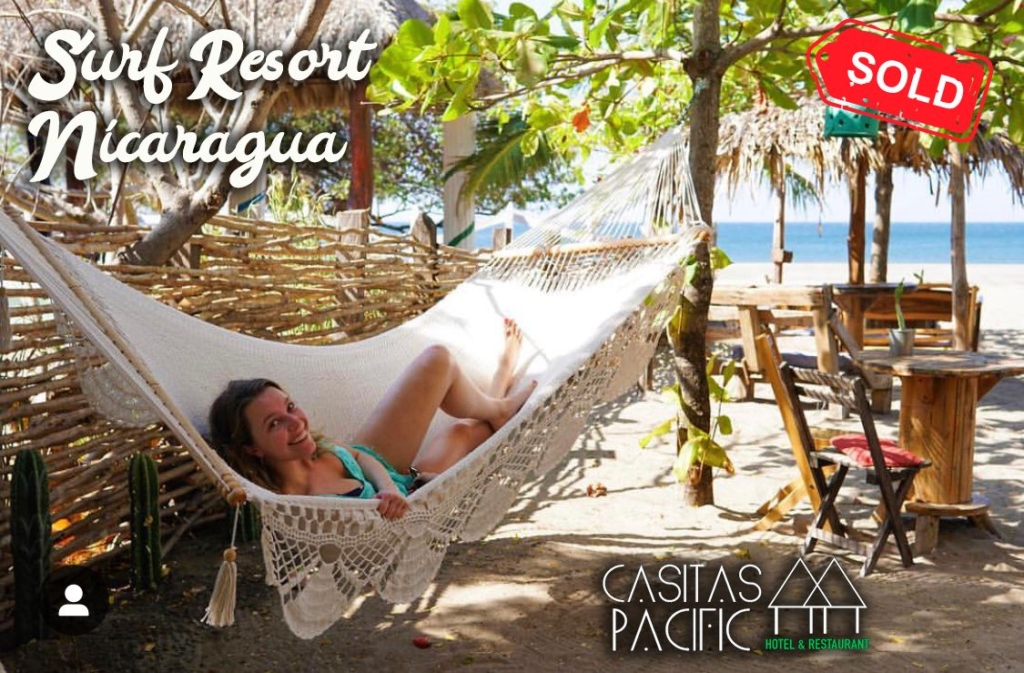
International Surf Properties have succesuflly bought and sold properties in Nicaragua for over 10 years. We have dozens of clients that have enjoyed the low prices and ease of entry into the coastal, surf property market. One such recent sale is Casitas Pacific in Playa Guasacate, next to world famous Popoyo.
That distinction is important. The question is usually not, “Can a foreigner buy land in Nicaragua?” The better question is, “What exactly am I buying — titled private land, concession rights, possession rights, or a property with unresolved title issues?”
For oceanfront land, that question becomes even more important.
Why Nicaragua Oceanfront Land Is Attracting Foreign Buyers
Nicaragua’s Pacific Coast has a powerful combination of lifestyle and investment fundamentals:
World-class surf zones, warm water, year-round outdoor living, lower acquisition costs compared with many neighboring surf destinations, and growing international interest in boutique hospitality, wellness retreats, surf camps, private villas, and oceanview residential communities.
For buyers coming from California, Hawaii, Costa Rica, Mexico, Europe, Canada, or Australia, Nicaragua can feel like a coastal market from an earlier era — less saturated, more natural, and still full of possibility.
The best opportunities are often not the most obvious beachfront parcels. In many cases, the stronger buy may be titled land just outside the most restricted coastal zone, oceanview land with legal access, or a larger parcel positioned for a surf retreat, rental compound, or phased development.
Understanding Nicaragua’s Coastal Law
Nicaragua’s coastal property framework is shaped by Law No. 690, the Law for the Development of Coastal Zones. The law was created to regulate sustainable use, public access, tourism development, and administration of coastal zones.
For buyers, the most important concept is the coastal zone.
In general, the area from the high-tide line inland is treated differently than ordinary private land. The U.S. Embassy in Nicaragua advises that the open area between low and high tide, plus 50 meters from the high-tide mark, is open to public use. Local coastal-law summaries also commonly describe the first 50 meters from the high-tide line as public domain, with the next coastal band requiring careful review of title, concession status, and permitted use.
This does not mean every beachfront deal is bad. It means every beachfront deal needs to be understood correctly.
Titled Land vs. Concession Land
When buying oceanfront land in Nicaragua, foreign buyers should immediately ask:
Is this fully titled private property?
Is any portion of the property inside the protected public coastal zone?
Is the land held under concession?
Are there historical rights, possession claims, easements, leases, or access obligations?
Has the property been properly registered?
Nicaragua’s public registry framework recognizes that concessions granted under Law 690 should be registered as real rights in the Property Registry. That matters because a concession is not the same as fee-simple private title. A concession may give use rights, but the terms, duration, permitted uses, renewal rights, and transferability must be reviewed carefully by a qualified Nicaraguan attorney.
For many foreign buyers, the cleanest opportunity is properly titled land near the beach, with verified access, surveyed boundaries, clear municipal records, and a realistic development path.
The Due Diligence Checklist for Foreign Buyers
Before buying oceanfront land in Nicaragua, do not rely only on a seller’s description, Google Maps, a drone video, or a beautiful beach walk. The property must be verified on paper and on the ground.
At a minimum, buyers should request and review the registered title deed, a certificate of no encumbrances, and a topographic survey. A Nicaraguan law firm’s 2026 purchase-process guidance lists these as minimum documents for due diligence.
A strong buyer-side review should include:
- Title history and chain of ownership
- Public Registry verification
- Certificate of no liens or encumbrances
- Cadastral records
- Municipal tax status
- Access rights and road status
- Utility availability
- Water source
- Seller authority and identity verification
- Review of any concessions, leases, easements, or possession claims
Oceanfront Land and Public Beach Access
One of the biggest mistakes foreign buyers make is assuming that “beachfront” means exclusive control of the sand. In Nicaragua, as in many coastal countries, public beach access is a major legal and practical issue.
A beachfront parcel may have incredible value, but the public’s right to access the beach must be respected. Buyers should confirm whether there are existing paths, community access points, historic usage patterns, fishermen’s access, public roadways, or municipal plans that affect the property.
For surf-related properties, this can actually be a positive when handled correctly. A great surf property does not need to block the beach. The best projects work with the local environment, the community, and the natural flow of the coastline.
Best Types of Oceanfront Land for Foreign Buyers
The best oceanfront land in Nicaragua depends on the buyer’s goal.
Private Villa – look for titled land with reliable access, water, power potential, buildable topography, and enough elevation or setback to protect the home.
Surf retreat or boutique resort – look for larger parcels with ocean views, legal beach access, room for phased development, staff housing, guest units, parking, wastewater systems, and proximity to consistent surf.
Land banking – look for areas with improving access, nearby hospitality growth, surf demand, and clean title.
Conservation-minded project – look for coastal land that balances development potential with natural beauty, community compatibility, and low-impact design.
In Nicaragua, the most attractive deals are often the ones where lifestyle, surf, access, and legal clarity all line up.
Key Surf Zones to Watch
Nicaragua’s Pacific Coast is one of the strongest surf real estate corridors in Central America. Areas around Popoyo, Playa Guasacate, Playa Santana, Playa Colorado, Playa Yankee, San Juan del Sur, Las Peñitas, Masachapa, and Pochomil continue to attract surfers, lifestyle buyers, retreat operators, and investors.
Popoyo and Guasacate are especially known for consistent surf, a growing international community, and a mix of raw land, boutique hotels, private homes, and retreat-style properties. Playa Yankee offers a more secluded surf feel, while San Juan del Sur provides a more established town base with restaurants, services, nightlife, and regional access.
The right location depends on whether the buyer wants privacy, rental income, surf consistency, walkability, infrastructure, or long-term appreciation. There are also tax incentives for certain types of real estate purchases.
Common Buyer Mistakes
They fall in love with the beach before verifying the title. Assuming “oceanfront” means private beach ownership. Failing to check whether the property is titled or concession-based. They underestimate road, water, power, and permitting issues. They do not confirm whether a project can actually be built.
Another major mistake is using only the seller’s attorney. A foreign buyer should have independent legal representation. The attorney should work for the buyer, not the seller, not the agent, and not the developer. We avoid real estate fraud by a thorough due diligence process with our legal team.
What Makes a Strong Nicaragua Oceanfront Land Deal?
A strong deal usually has five things:
- Clear legal status
- Verified boundaries
- Practical access
- Realistic development potential
For surf buyers, add one more: proximity to quality waves.
A beautiful parcel with unclear title is not a great deal. A cheap beachfront lot with no road, no water, no buildability, and no clean paperwork can become expensive fast. On the other hand, a well-positioned titled parcel near a consistent surf zone can be a powerful long-term lifestyle and investment asset.
Buying Process Overview
A typical Nicaragua land purchase may include property selection, offer negotiation, a purchase agreement or promesa de venta, deposit, due diligence, final deed preparation, closing, tax payment, and registration. The acquisition should be formalized through a public deed prepared by an authorized Nicaraguan notary.
The exact structure can vary depending on the property, seller, title condition, buyer nationality, payment method, and whether the property is being purchased personally or through an entity.
Foreign buyers should build enough time into the process for legal review, survey work, registry checks, and municipal verification.
Final Buyer Advice
Buying oceanfront land in Nicaragua in 2026 can be an incredible opportunity for the right buyer. The country offers warm water, strong surf, natural beauty, emerging coastal communities, and real potential for private villas, boutique resorts, retreats, and long-term land ownership.
But Nicaragua rewards buyers who do the work.
The best Nicaragua oceanfront land purchases are built on three things: local knowledge, legal clarity, and a clear vision for the property.
For foreign buyers, the goal is not simply to own land by the ocean. The goal is to own the right land, in the right location, with the right legal structure, and the right long-term plan.
FAQs: Buying Oceanfront Land in Nicaragua
Can a foreigner own land in Nicaragua?
Yes. Foreigners can generally acquire real estate in Nicaragua with a valid passport, but coastal, concession, border-area, and title-history issues require extra due diligence.
Can foreigners own beachfront land in Nicaragua?
Foreigners may be able to own titled coastal land, but the first coastal zone near the high-tide line is subject to public-use and coastal-law restrictions. Buyers must confirm whether the property is titled private land, concession land, or affected by the public coastal zone.
Is all oceanfront land in Nicaragua titled?
No. Some coastal properties may be titled, some may involve concession rights, and others may have possession claims or unclear documentation. This is why legal due diligence is essential.
What documents should I review before buying land?
At minimum, buyers should review the registered title deed, certificate of no encumbrances, and topographic survey, along with tax status, cadastral information, access rights, and any concession or coastal-zone documentation.
Should I use a local attorney?
Yes. A foreign buyer should use an independent Nicaraguan attorney who represents the buyer’s interests and can verify title, registry status, taxes, surveys, concessions, and closing documents.
Is Nicaragua good for surf real estate buyers?
Yes, for the right buyer and the right property. Nicaragua offers consistent Pacific surf, warm water, emerging coastal communities, and opportunities for private homes, surf retreats, boutique hotels, and long-term coastal land investment.
What is the biggest risk when buying oceanfront land in Nicaragua?
The greatest risk in buying oceanfront land is not the coastline itself — it is moving forward without fully understanding what you are buying. Title status, coastal-zone restrictions, legal access, surveyed boundaries, utilities, permitting, and development feasibility must all be verified before a beach parcel can be considered a true investment opportunity.
At International Surf Properties, we specialize in coastal and surf-driven real estate worldwide. Our role is to help buyers see beyond the beauty of the beach and understand the legal, practical, and long-term fundamentals behind the property. From title review and local due diligence to trusted legal support and on-the-ground guidance, we help walk buyers through the process with clarity, confidence, and the right professional team in place.
This article is for general informational purposes only and is not legal, tax, or investment advice. Foreign buyers should consult qualified Nicaraguan legal, tax, survey, and real estate professionals before purchasing property.